- English
- Español
- Português
- русский
- Français
- 日本語
- Deutsch
- tiếng Việt
- Italiano
- Nederlands
- ภาษาไทย
- Polski
- 한국어
- Svenska
- magyar
- Malay
- বাংলা ভাষার
- Dansk
- Suomi
- हिन्दी
- Pilipino
- Türkçe
- Gaeilge
- العربية
- Indonesia
- Norsk
- تمل
- český
- ελληνικά
- український
- Javanese
- فارسی
- தமிழ்
- తెలుగు
- नेपाली
- Burmese
- български
- ລາວ
- Latine
- Қазақша
- Euskal
- Azərbaycan
- Slovenský jazyk
- Македонски
- Lietuvos
- Eesti Keel
- Română
- Slovenski
- मराठी
- Srpski језик

Remote Control PCB Assembly FAQ for U.S. Buyers in 2026: From Design Files to Tested Delivery
A remote control PCBA can look simple on a drawing and still fail in the field. A missed battery-polarity check, an RF component substitution, or a button dome that does not match the enclosure can turn a low-cost board into a return problem.
For U.S. buyers, the real purchasing decision is not just who can place components. You need a supplier that can interpret design files, flag obsolete or difficult parts, control SMT and DIP assembly, test the functions that matter, and communicate quickly when the build does not match the original plan.
Key Takeaways
- Define the remote’s operating environment, battery arrangement, RF requirements, buttons, LEDs, enclosure, and target production quantity before requesting a quote.
- Send complete manufacturing data: schematics, PCB files, bill of materials, approved vendor list, assembly drawings, firmware or test instructions, and revision history.
- Prototype builds should prove electrical behavior, mechanical fit, RF performance, and user input reliability before production tooling or larger-volume purchasing.
- Ask how the supplier handles component alternatives, incoming inspection, SMT and DIP process control, functional testing, traceability, and nonconforming boards.
- Hitech provides PCB design and layout, SMT/DIP assembly, inspection, testing, and electronic assembly support for custom Remote PCBA projects from Shenzhen.
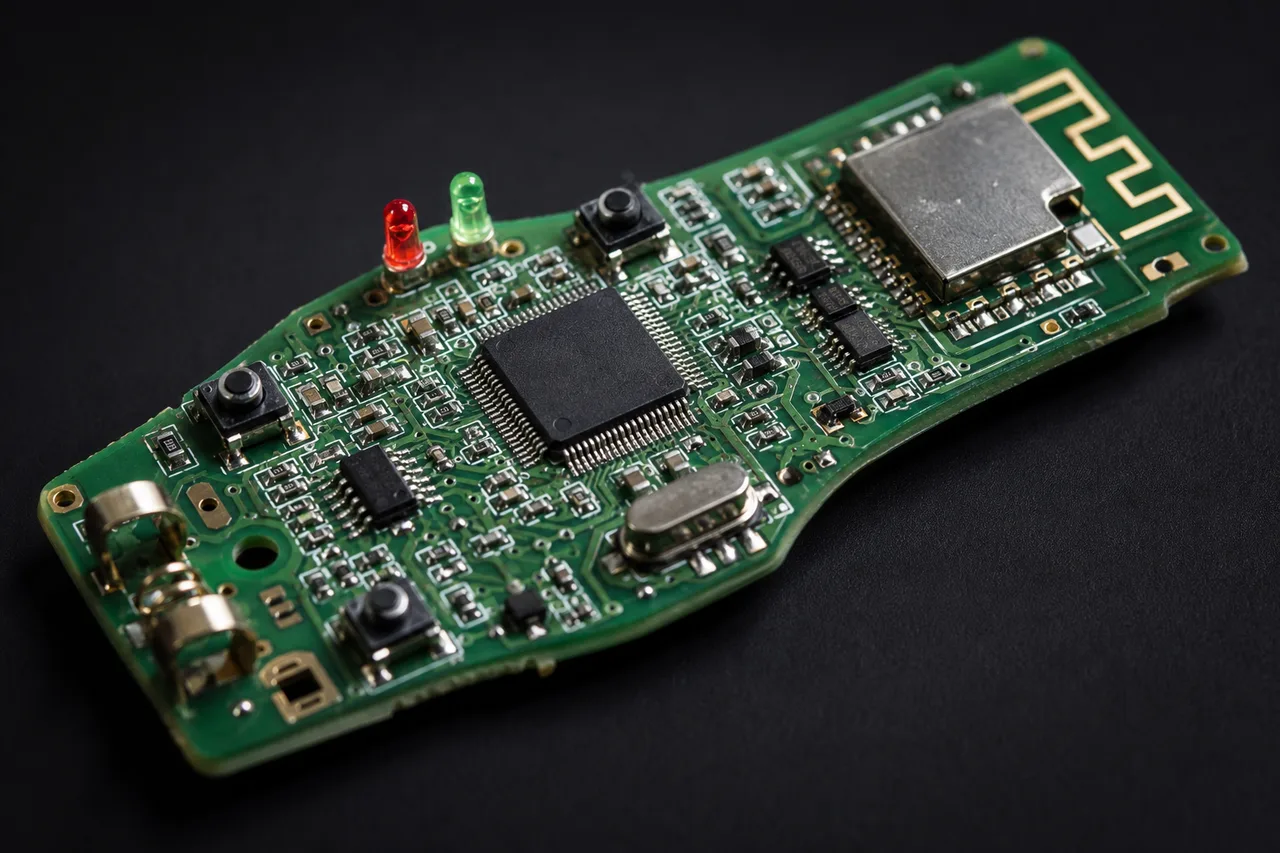
Key Takeaways for Remote Control PCBA Procurement
The first quote is often based on incomplete information. That is where avoidable cost enters the project. A supplier may price the board correctly but exclude programming, cable installation, button fitting, RF validation, or a functional test fixture. Ask for the manufacturing scope in writing before comparing unit prices.
Remote-control electronics also have a mechanical side that deserves equal attention. The PCB must sit correctly inside the housing, the buttons must line up with the keypad or rubber membrane, the LED must be visible through its light pipe, and the battery contacts must maintain pressure after repeated handling. A board that passes an electrical test can still fail as a finished remote.
Component risk deserves early review. MCU and RF devices may have long lead times, allocation issues, or approved-source restrictions. If a substitute is possible, the supplier should identify the exact change and explain what needs to be rechecked. An RF module, crystal, antenna network, or power-management IC is not a casual replacement.
Testing should match the product’s actual use. Continuity and visual inspection are useful, but they do not prove that a button sends the correct command, an LED is driven correctly, the remote enters sleep mode, or the radio section communicates with the target receiver. Those checks require a defined functional test method.
For a broader manufacturing scope, you can review Hitech’s remote controller PCBA assembly service and compare it with your required design, assembly, inspection, and delivery steps.
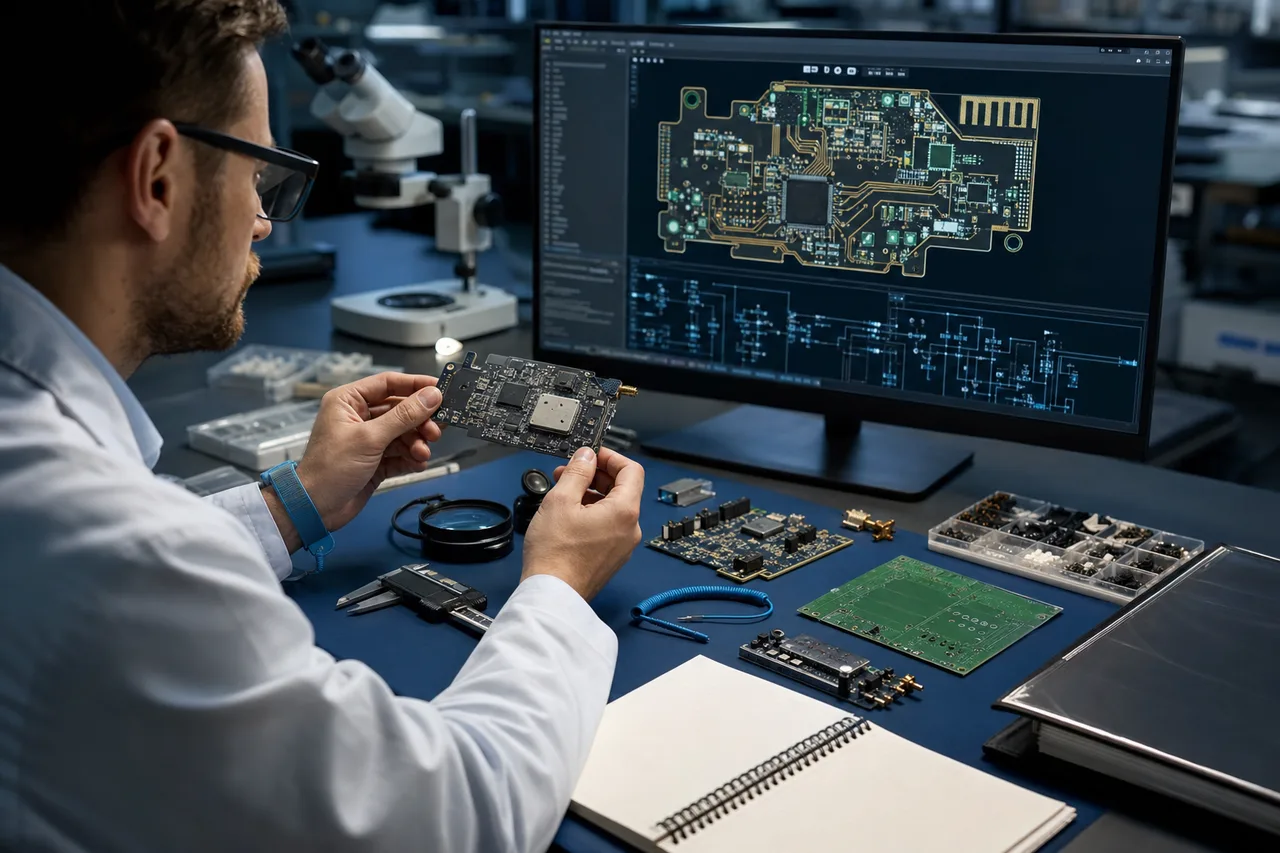
Remote Control PCB Assembly FAQ: Design Files, Component Alternatives, Testing, and Lead-Time Communication
What files should you send for a remote control PCBA quote?
Send the latest schematic, PCB layout and fabrication data, bill of materials, assembly drawing, pick-and-place file, Gerber or equivalent production files, and any approved vendor list. Include the board revision, component designators, polarity markings, connector details, battery specifications, and the expected finished assembly quantity. If the remote uses firmware, provide the programming file or explain who will program it. Test instructions, golden samples, enclosure drawings, and photos are also valuable because they show how the board is used after assembly.
Can a PCBA supplier replace unavailable components?
Often, but the answer depends on the part. Resistors, capacitors, and some general-purpose diodes may have practical alternatives if package, electrical rating, temperature range, and reliability requirements match. MCU, RF, memory, power-management, sensor, crystal, and connector substitutions require a more careful engineering review. Ask for a formal deviation or approval record that identifies the original part, proposed alternative, reason for the change, and required validation. Do not approve a substitute only because the package looks identical.
What testing should a remote-control board receive?
A sensible test plan may include incoming inspection, automated or visual solder-joint inspection, polarity and component-presence checks, power-up testing, current-consumption checks, button-input verification, LED operation, programming confirmation, and RF communication testing where applicable. The exact sequence depends on the product. A board intended for an appliance remote may need command transmission checks; an industrial or automotive remote may need more controlled environmental and interface verification. Define pass/fail criteria before production, not after the first failure report.
How should you discuss lead time with a Chinese PCBA manufacturer?
Separate the schedule into engineering review, component procurement, PCB fabrication, assembly, programming, testing, rework if required, and shipping. Ask which dates depend on customer approval and which depend on material arrival. A quoted lead time is not meaningful if one RF module remains unconfirmed. Hitech states that it supports prompt delivery and after-sale support, but your purchase order should still identify the agreed scope, shipping method, destination, documentation, and process for handling schedule changes.
What is the difference between a remote PCBA and a complete remote control?
A remote PCBA is the populated electronic board. A complete remote control may also include the housing, keypad or buttons, battery contacts, light pipe, labels, wiring, firmware, final assembly, and packaging. Confirm whether you are buying boards only, tested subassemblies, or a finished box-build product. The distinction affects inspection, packaging, mechanical fit checks, and the party responsible for final product performance.
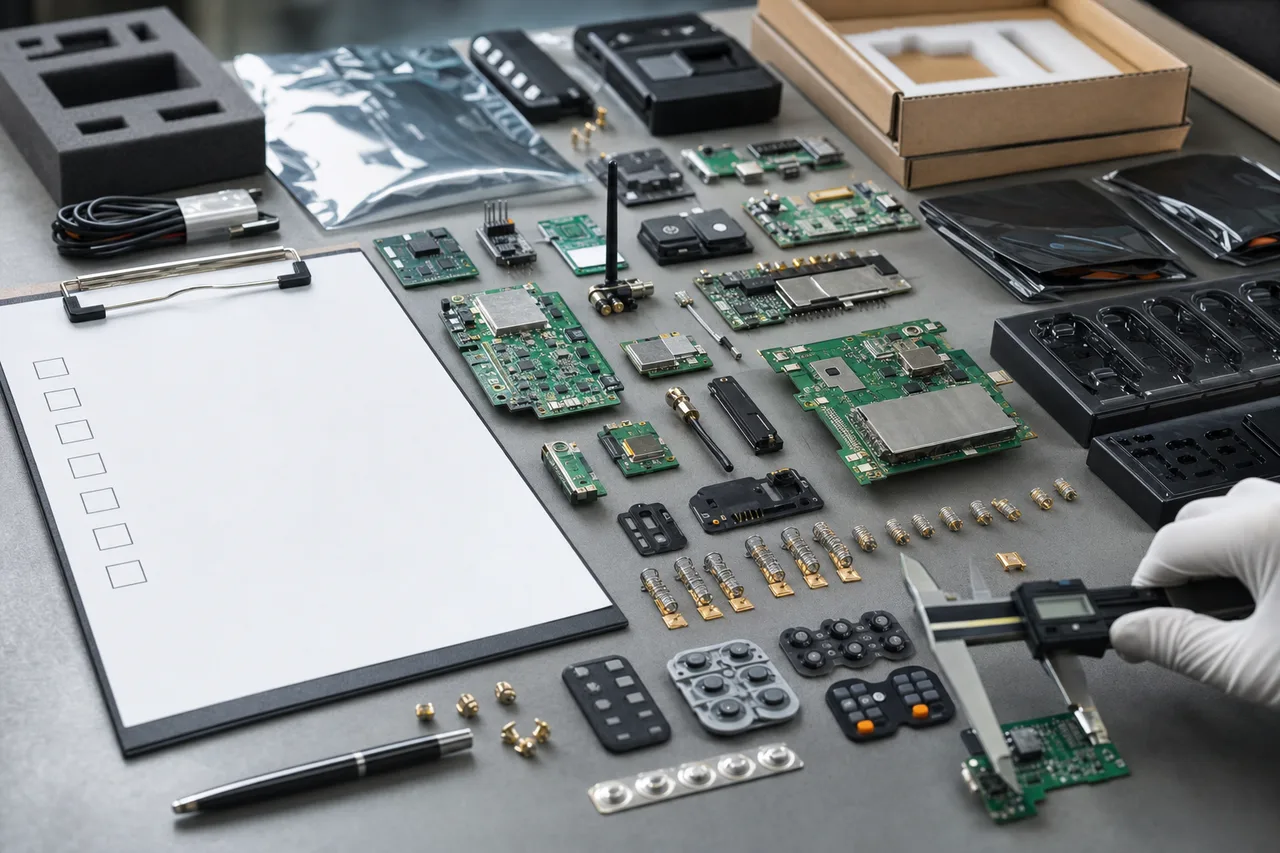
Remote PCBA Requirements to Define Before Requesting a Quote
A useful request for quotation gives the supplier enough information to price the actual job rather than a simplified version of it. Start with the product application. State whether the remote is for a household appliance, vehicle accessory, industrial equipment, robot, medical instrument, or another electronic product. The application affects operating conditions, testing depth, component selection, and documentation.
Describe the electrical requirements in practical terms: battery type and quantity, input-voltage range, expected operating current, sleep behavior, button count, LED color and drive method, connector style, and communication technology. If the board includes an MCU, identify whether the supplier will program it and how firmware versions will be controlled. For an RF design, provide the module or chipset, antenna arrangement, frequency region, and any required receiver pairing or communication test.
Mechanical information is just as useful. Provide the PCB outline, thickness, mounting holes, keep-out zones, button locations, display or LED openings, battery-contact geometry, and enclosure drawings. A remote assembly may pass an electrical test but fail because the actuator travel is wrong or the board bows against the housing.
State the production intent. Prototype, pilot, and recurring production volumes have different purchasing and inspection needs. Tell the supplier whether you need a one-time build, staged releases, buffer stock, or a complete electronic assembly. Also identify packaging requirements, labeling, date-code restrictions, serialization, and shipping destination.
Finally, list what is not negotiable. Approved components, prohibited countries of origin, required material declarations, test records, firmware controls, and customer-owned tooling should be documented before the quote. This prevents a low initial price from becoming a series of change orders.
Prototype vs. Production Remote Control PCB Assembly: Comparison Table for U.S. Buyers
Prototype and production assembly are not simply smaller and larger versions of the same purchase. A prototype is meant to expose design weaknesses. Production is meant to repeat a controlled process with predictable output. Treating the first build as a production order can hide problems in RF behavior, button alignment, battery life, or enclosure fit.
| Consideration | Prototype remote PCBA | Production remote PCBA |
|---|---|---|
| Primary objective | Find electrical, mechanical, firmware, and RF issues before release. | Repeat the approved design with controlled process variation. |
| Component sourcing | May use approved alternates after engineering review. | Should follow an approved bill of materials and change-control process. |
| Testing focus | Broad learning: function, fit, current draw, inputs, outputs, and communication. | Repeatable inspection and functional testing against defined acceptance criteria. |
| Documentation | Engineering notes, build observations, and revision corrections. | Inspection records, test results, traceability, deviations, and shipment records as required. |
| Main risk | Learning too little from a small build and carrying defects forward. | Repeating an unresolved design or process problem across many boards. |
For prototypes, ask the assembler to report observations rather than silently correcting small issues. A misplaced reference designator, difficult solder joint, or connector that interferes with the housing may reveal a design-for-assembly problem. For production, lock the approved data set and define how engineering changes are reviewed.
Do not judge a supplier solely by prototype speed. A fast prototype with weak documentation can create a painful production transfer. Conversely, a supplier that asks detailed questions about the BOM, RF section, programming, and final use is usually protecting the later build, not slowing it down.
How to Move a Remote Controller PCBA from Design Review to Delivery
The cleanest projects move through defined gates. Each gate answers a different question, and skipping one usually pushes the risk into a more expensive stage.
- Submit the manufacturing package. Provide the schematic, PCB data, BOM, assembly drawing, approved parts, firmware information, and mechanical references. Identify the current revision and any known design concerns.
- Complete design-for-manufacturing review. The supplier should review component packages, polarity, spacing, solder access, panelization, test access, board finish requirements, and the separation between SMT and DIP operations. RF layout and antenna keep-outs deserve specific attention.
- Resolve material and substitution questions. Confirm which parts are available, which are customer-supplied, and which alternatives require approval. Do not let procurement decisions change the functional design without a documented review.
- Build and inspect the prototype or pilot lot. Check solder quality, component presence, programming, current behavior, buttons, LEDs, battery contacts, RF communication, and mechanical fit. Record failures by board revision and component reference.
- Approve the corrected data set. Update the BOM, drawings, firmware version, test instructions, and any approved deviations. The production build should use one controlled package, not a collection of email attachments.
- Run production testing and release. Review inspection and functional records, confirm packaging and labels, and agree on the disposition of rejected or reworked boards before shipment.
Communication matters at every gate. A supplier should tell you when a part is unavailable, a drawing conflicts with the PCB, or the test method cannot distinguish a good board from a marginal one. Prompt answers are useful, but documented answers are what protect the project.
How to Qualify a Remote Control PCB Assembly Supplier for Quality, Testing, and Communication
Start with capability, not a polished website. Ask whether the supplier regularly handles the board technologies in your design: fine-pitch SMT, QFN, BGA, through-hole parts, battery contacts, connectors, programming, and RF modules. Hitech’s stated services include SMT PCB assembly, DIP PCB assembly, BGA and QFN assembly, prototype PCBA, inspection, testing, and electronic assembly. Those capabilities should still be matched against your actual files.
Ask how incoming components are checked and how nonconforming material is controlled. You want to know how lot information, date codes, moisture-sensitive devices, damaged packaging, and unapproved substitutions are handled. For the finished board, ask what inspection is available, how test fixtures are created, whether test data is retained, and how rework is identified.
Communication is a qualification criterion. Can the supplier explain a BOM discrepancy in clear English? Will you receive a consolidated question list instead of scattered messages? Does the project contact understand the difference between an electrical substitute and a drop-in package match? A remote-control PCBA project can lose days while teams debate a single unclear part number.
Request evidence appropriate to the project, such as sample inspection records, functional test reports, process photographs, or references for similar assemblies. You do not need a thick presentation. You need proof that the supplier can connect the design package to a repeatable build and a traceable shipment.
Also clarify after-sale support. Ask how field failures are investigated, how returned boards are analyzed, and how corrective actions are communicated. Hitech states that it provides after-sale support; include response expectations and escalation contacts in the commercial agreement so support does not depend on one individual.
Hitech’s Shenzhen PCB Design, SMT/DIP Assembly, Inspection, and Testing Approach
Hitech’s Remote PCBA workflow refers to its support for remote-control board projects across design, sourcing, assembly, inspection, testing, and electronic assembly. The value is not the label itself. The useful question is whether those activities are connected into one controlled handoff. A remote board needs the schematic and layout to agree with the BOM, the assembly process to respect the mechanical design, and the test method to reflect how the remote actually operates.
Hitech is a Shenzhen-based OEM/ODM electronics manufacturer founded in 2010. Its stated services cover PCB design and layout, PCB assembly, SMT and DIP assembly, PCBA testing and quality control, and box-build-related electronic assembly. For remote-control products, the company describes assemblies that may include an MCU, battery power section, IC chips, SMD components, buttons, LEDs, and RF modules.
That component mix creates several practical checks. The MCU may require programming and version control. Battery-powered boards need attention to polarity, leakage, sleep current, and contact pressure. Buttons must be checked for actuation and alignment. LEDs need correct polarity, color, brightness behavior, and light-pipe fit. RF modules need verified communication rather than a visual inspection alone.
Hitech serves OEM and electronics customers in communication, automotive, medical, instrumentation, industrial, and consumer-electronics markets. Those markets do not all use the same acceptance criteria, so you should provide the application-specific test requirements rather than assume a generic board test is enough. Review the scope directly through Hitech’s custom Remote PCBA manufacturing page before sending production data.
Compliance and Quality Documentation for Remote-Controlled Electronic Products
Compliance responsibility depends on the finished product, its market, its radio functions, and how it is sold in the United States. A PCB assembler should not be expected to guess which declarations or test reports your product requires. Tell the supplier whether the board is part of a consumer appliance, vehicle system, industrial control, medical device, or another regulated product, and identify the final product owner responsible for market approvals.
Ask what documentation can accompany the build. Depending on your program, that may include a controlled BOM, revision history, inspection records, functional test results, material declarations, component certificates, lot traceability, deviation approvals, rework records, and shipment packing information. If the product contains a radio, coordinate the RF compliance work for the complete intended configuration, including antenna and enclosure, rather than treating the bare board as the whole product.
Quality documents are only useful when they identify what was actually built. The board revision, firmware version, component changes, inspection status, and test result should be linked to the production lot or serial number where traceability is required. Do not accept generic certificates as a substitute for product-specific records.
Before purchase, make a document matrix listing what you need at quotation, first article, production release, and shipment. Give that matrix to Hitech with the manufacturing package so its team can confirm what it can provide and what remains your responsibility.
Request a Remote PCBA Quote From Hitech: https://www.hitech-pcba.com/remote-pcba.html
A useful quote request should let Hitech evaluate both the board and the finished-use requirements. Send the latest design files, BOM, board quantity, target destination, component restrictions, programming needs, test expectations, mechanical references, and desired delivery window. If the design is still changing, say so. A prototype quotation and a recurring-production quotation should not be treated as the same commercial request.
Include a short project brief that answers four practical questions: what the remote controls, how it communicates, how it is powered, and what failure would be unacceptable in the field. That context helps the supplier identify the right inspection and functional checks instead of pricing assembly in isolation.
Discuss Your Remote PCBA Build With Hitech
Send your design package and production requirements to Hitech for a review of PCB design, SMT/DIP assembly, testing, inspection, component availability, delivery, and after-sale support.
Visit Official Website →